
.png)
If you had tried to predict the future of perfusion 15 years ago, transcatheter aortic valve replacement (TAVR) would have looked like a serious threat.
Aortic valve replacement had long been a standard open-heart operation requiring cardiopulmonary bypass. Then TAVR arrived and allowed many of those same patients to receive a new valve without a sternotomy or a traditional pump run. As indications expanded from inoperable patients to high-risk, intermediate-risk, and eventually low-risk patients, the potential impact on surgical volume became increasingly apparent.
Some of that impact happened; TAVR did take cases away from the operating room.
But what’s more interesting is that perfusion didn’t contract along with those cases. The number of certified perfusionists continued to rise, while the clinical territory perfusionists cover expanded well beyond the conventional heart-lung machine. The question remaining is why?
TAVR Really Did Change Case Volume
First, the shift toward TAVR has been substantial. In 2019, TAVR volume in the United States reached 72,991 procedures and exceeded all forms of surgical aortic valve replacement, which totaled 57,626 cases. That same year marked the FDA expansion of TAVR to patients at low surgical risk.
The American Board of Cardiovascular Perfusion saw the same shift in its own workforce surveys. In 2016, 20.7% of perfusionists responding to the survey said their institution did not perform transcatheter valve procedures like TAVRs. By 2021, that figure had fallen to 5.7%. ABCP described the change as a strong indirect indication that standalone valve surgery using cardiopulmonary bypass had declined as more patients were referred for transcatheter treatment.
For a profession whose traditional workload is tied closely to open cardiac surgery, that sounded like the beginning of a contraction.
And yet, perfusion kept growing anyway.
During the 2022 clinical cycle, ABCP reported 4,750 certified perfusionists, and in 2025, that number had grown to 5,169. That’s over 400 additional certified perfusionists in three years. What was happening around the profession during those same years helps put that growth into context.
Perfusion’s Scope Was Expanding at the Same Time
TAVR was not the only cardiovascular technology gaining ground through the 2010s and early 2020s. Several other areas were creating new applications for the same expertise perfusionists had traditionally brought to cardiopulmonary bypass.
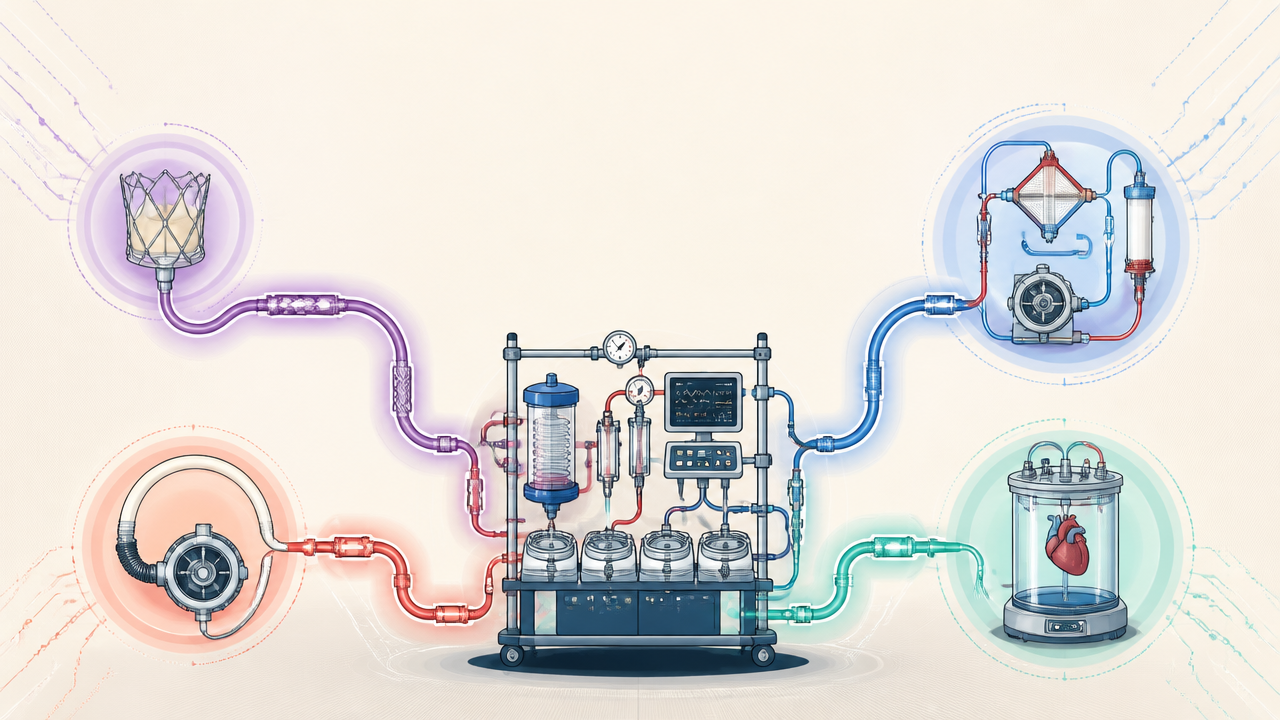
By the early 2020s, that broader footprint included TAVR standby, ECMO, mechanical circulatory support, and increasingly, organ perfusion.
TAVR standby
TAVR may have eliminated the need for cardiopulmonary bypass in many cases, but it created a new role for perfusionists as the procedure spread. In 2016, about 63% of ABCP survey respondents reported providing operating-room backup for transcatheter valve procedures. By 2021, 82.9% reported participating in TAVR standby. The survey questions were structured somewhat differently between the two surveys, but the broader pattern shows perfusion remaining closely involved as TAVR expanded.
ECMO
At almost the same time, ECMO was growing fast. What had once been a relatively limited form of extracorporeal support expanded dramatically, particularly in adult critical care.
The ELSO Registry recorded just 851 adult ECMO runs in 2009 compared with 17,975 in 2021, an increase of more than twentyfold. Perfusion became deeply involved in that growth. In ABCP’s most recent 2025 survey, 78.6% of respondents said perfusion staff at their institution participated as primary ECMO operators.
ECMO programs may use nurses, respiratory therapists, ECMO specialists, perfusionists, or multidisciplinary models, but the technology created a major additional setting for perfusion expertise outside the conventional cardiac OR.
Mechanical circulatory support and VADs
Mechanical circulatory support created another extension of the role. Ventricular assist devices and other temporary support systems require many of the same skills perfusionists bring to bypass and ECMO, including managing blood flow, anticoagulation, hemodynamics, and extracorporeal equipment.
By 2021, 47.1% of ABCP survey respondents reported participating in VAD implantation, and staff perfusionists were the most commonly reported group providing coverage for non-ECMO mechanical circulatory support at respondents’ institutions.
The role has become established enough to influence how new perfusionists are trained. Beginning in 2023, ABCP began requiring certification candidates to include five ECMO or VAD cases among the 75 primary clinical perfusion activities completed before the Perfusion Basic Science Examination.
Normothermic regional perfusion and ex vivo organ perfusion
More recently, transplantation has opened another area of extracorporeal work. Normothermic regional perfusion (NRP) restores circulation to selected organs during organ recovery after circulatory death. Ex vivo organ perfusion uses extracorporeal technology to perfuse and maintain an isolated donor organ outside the body before transplantation.
These are newer areas, but they are already showing up in the workforce data. In ABCP’s 2025 survey, 18.5% of respondents reported an active NRP program at their institution, with another 8.9% reporting one in development. For ex vivo organ perfusion, 17.5% reported an active program and another 6.7% reported one in development. ABCP cautions that these figures represent individual respondents rather than unique centers, but they still show how quickly these technologies are entering perfusion practice.
ABCP now formally recognizes both NRP and ex vivo organ perfusion as primary clinical perfusion activities for practicing CCPs, placing them alongside CPB, ECMO, VAD support, and other forms of extracorporeal circulation.
A Profession That Kept Expanding With the Technology
None of these are equal replacements for an open valve case, and the available data cannot tell us that ECMO, TAVR standby, VADs, or organ perfusion made up for every surgical aortic valve replacement displaced by TAVR.
But taken together, they help explain how perfusion could continue growing even as one traditional source of pump cases declined.
Cardiopulmonary bypass remains the foundation of the profession. What changed was everything that began accumulating around it. During the same broad period that TAVR was shifting patients away from open valve surgery, adult ECMO use surged, perfusionists became part of structural heart standby teams, mechanical circulatory support became an established component of perfusion practice, and eventually NRP and ex vivo organ perfusion began opening another area of work.
That history also says something about the future of the career. There will almost certainly be other procedures that become less invasive and other traditional cases that decline as technology advances. Perfusion has already shown that its future does not depend entirely on preserving every operation that once required the heart-lung machine.
The specialty has continued to grow because the expertise behind perfusion applies anywhere medicine needs to temporarily support circulation, oxygenation, or the perfusion of organs outside their normal physiology. As those technologies have expanded, perfusion has expanded with them.